
JAPANESE ART
EXHIBITION
Exhibition of Japanese drawings and paintings from the 17th to the 20th century on vertical "Kakemono" scrolls and grand Edo-period "Byobu" folding screens
The Delicate Art of Japanese Kakemono
Kakemono or Kakejiku are vertical scrolls of paper or silk suspended gracefully in traditional Japanese interiors. They feature paintings of flora, fauna, deities, and landscapes. Often displayed during the tea ceremony, they create a contemplative sanctuary fostering an aura of calm and serenity, inviting guests to center themselves and attain a state of inner tranquility.
Minimalism and balance are quintessential elements in the art of the Kakemono. The refined, harmonious compositions evoke the principles of wabi-sabi—a Japanese aesthetic philosophy that celebrates the beauty of imperfection, authenticity, and simplicity. Kakemono embody multifaceted symbolism, curated according to their artistic narrative and ceremonial context.
They are also enshrined in Buddhist temples and Shinto shrines, depicting deities, bodhisattvas, or sacred symbols. These revered depictions inspire the pursuit of enlightenment, inner peace, and communion with the divine.
Artistic renderings of landscapes, portraits, wildlife, abstract forms, and scenes of traditional life are celebrated as expressions of natural beauty, poetry, and spirituality, masterfully executed by renowned artists.
Some bear emblems of longevity and auspicious fortune, such as cranes—symbols of long life—or turtles, embodying steadfastness and wisdom. These motifs are traditionally presented to convey blessings of prosperity and goodwill. Others portray narrative scenes drawn from Japanese folklore and classical legends, perpetuating cultural heritage and timeless chronicles.
Within Japanese culture, the rotation of the Kakemono is intimately tied to the changing seasons. They are curated periodically to reflect seasonal landscapes or themes: cherry blossoms in spring, vibrant maple leaves in autumn, or snow-laden vistas in winter.
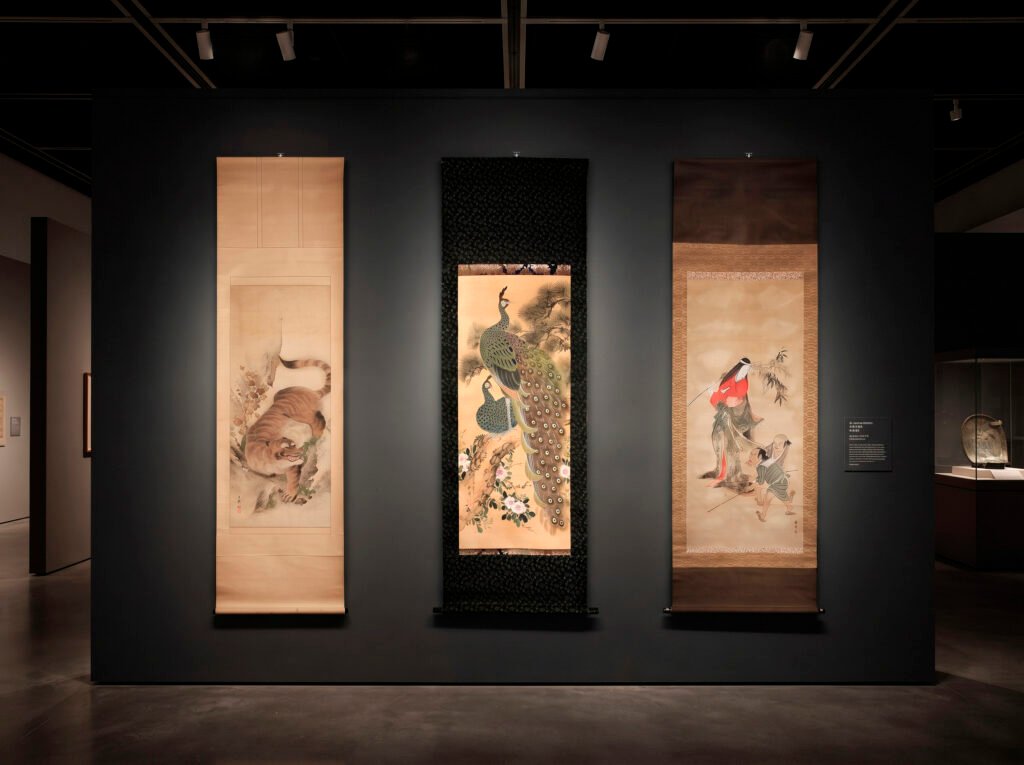
Symbolism of Animal Depiction
The depiction of animals in Japanese painting is deeply woven into the nation’s cultural, spiritual, and aesthetic tapestry. Every creature carries an intrinsic symbolism rooted in Shinto traditions, Buddhism, mythology, and ancestral folklore.
Style and Influence in Japanese Painting
Japanese paintings depicting animals frequently embrace the aesthetic principles of ukiyo-e (literally "pictures of the floating world") or nihonga (traditional Japanese-style painting).
The portrayal of the animal realm in Japanese painting transcends mere pictorial representation, personifying profound philosophical, spiritual, and cultural values. Each creature serves as a bridge between the natural world, sacred beliefs, and fine art, enriching the visual lexicon of its master painters.
BYOBU - The Harmony of Japanese Folding Screens
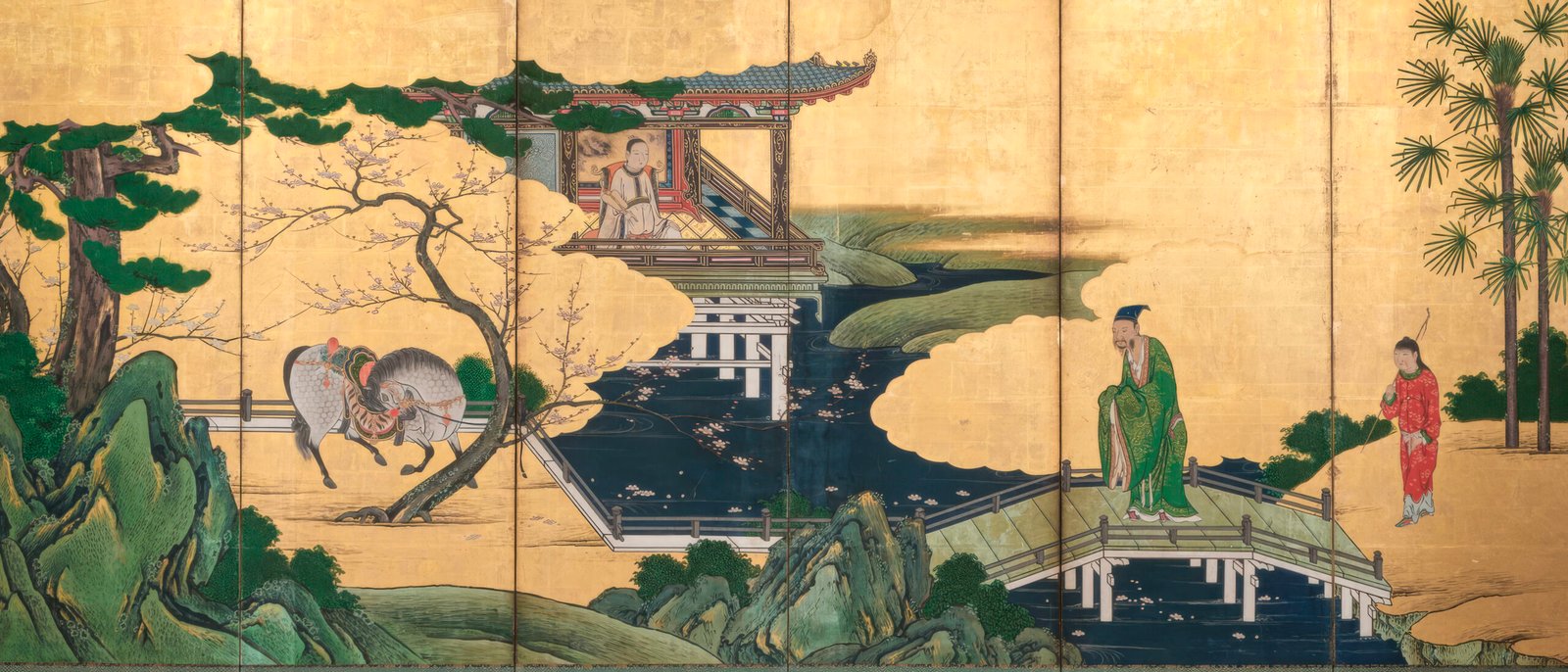
Japanese painted folding screens, known natively as "byōbu" (屏風), boast an illustrious heritage tracing back to antiquity. Originating in ancient China, where analogous screens were employed as decorative room dividers, these masterpieces were crafted from finely decorated wooden panels or parchment.
During the Heian period (794–1185), Japanese screens transcended their architectural function as space dividers to become distinguished artistic canvases. Master artisans adorned them with delicate floral motifs, panoramic natural vistas, poetic verses, and evocative imagery.
During the Edo period (1603–1868), they attained their aesthetic zenith as monumental works of art. Acclaimed painters contributed to the creation of exquisite, intricately detailed screens, which graced the estates of the Japanese nobility and the sacred halls of Buddhist temples.
Composition and Spatial Design
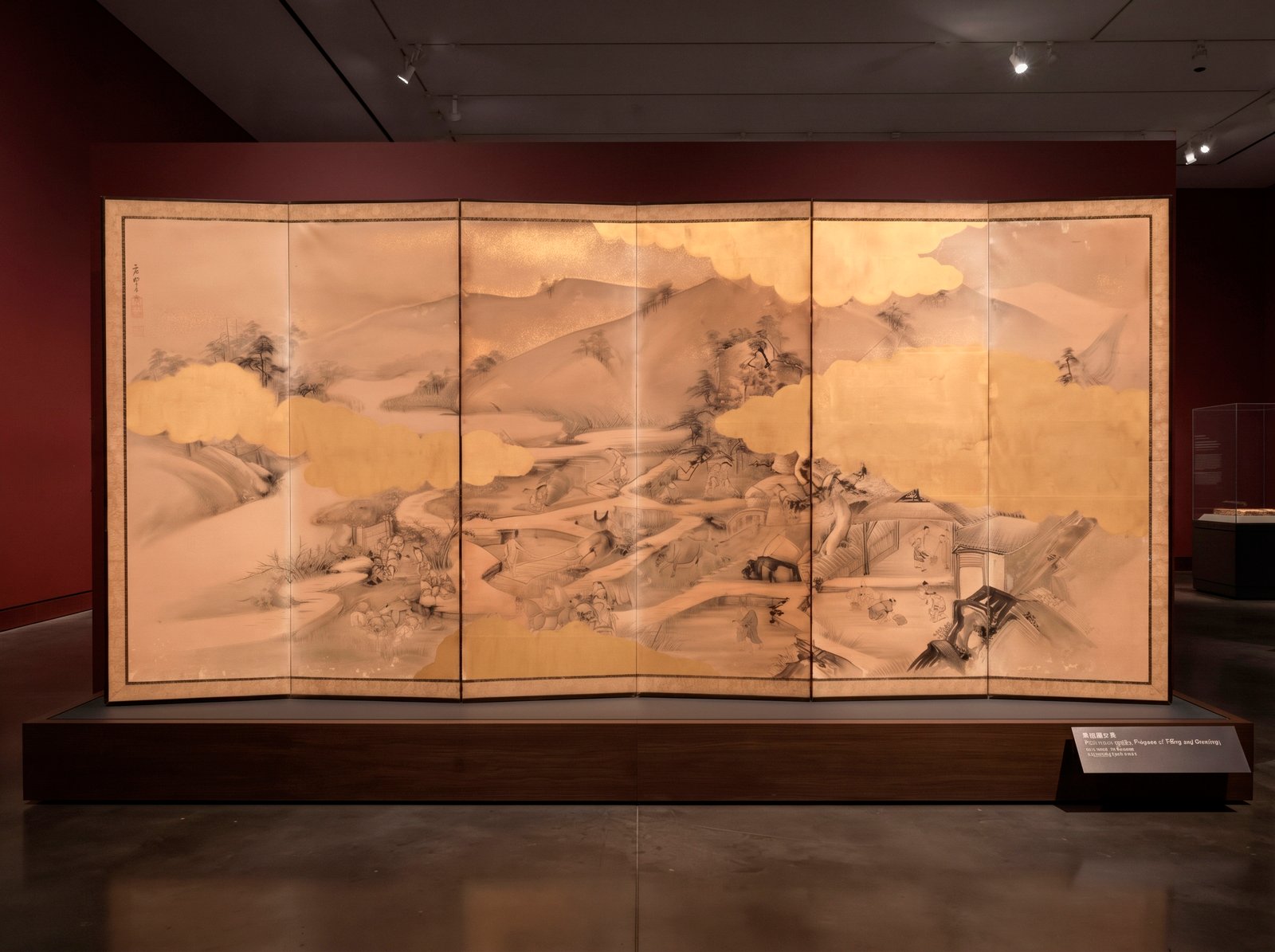
Byōbu masterfully embody the principles of asymmetrical composition and ma (間)—a Japanese aesthetic concept celebrating negative space to cultivate visual harmony and allow the artwork to breathe. In contrast to more centered Western compositions, byōbu narratives unfold horizontally, offering an immersive, dynamic visual journey.
Materials and Techniques
The noble materials employed—washi paper, silk, lacquered wood, gold, and silver leaf—lend an exceptional visual and tactile opulence. The application of gold leaf (kinpaku, 金箔) is iconic, casting a luminous glow that interacts with natural ambient light and accentuates the depth of the landscapes.
Technically, the works are rendered primarily with Japanese ink (sumi-e) and refined mineral pigments, techniques that allow for delicate transparencies and intricate layering.